


Why Pool Brushing Is Non-Negotiable
Data Point: According to the CDC Model Aquatic Health Code, routine mechanical cleaning reduces pathogenic biofilm by up to 70%, supplementing chemical disinfection. Automated cleaners alone leave up to 40% of surfaces untouched, especially steps, corners, and waterlines.
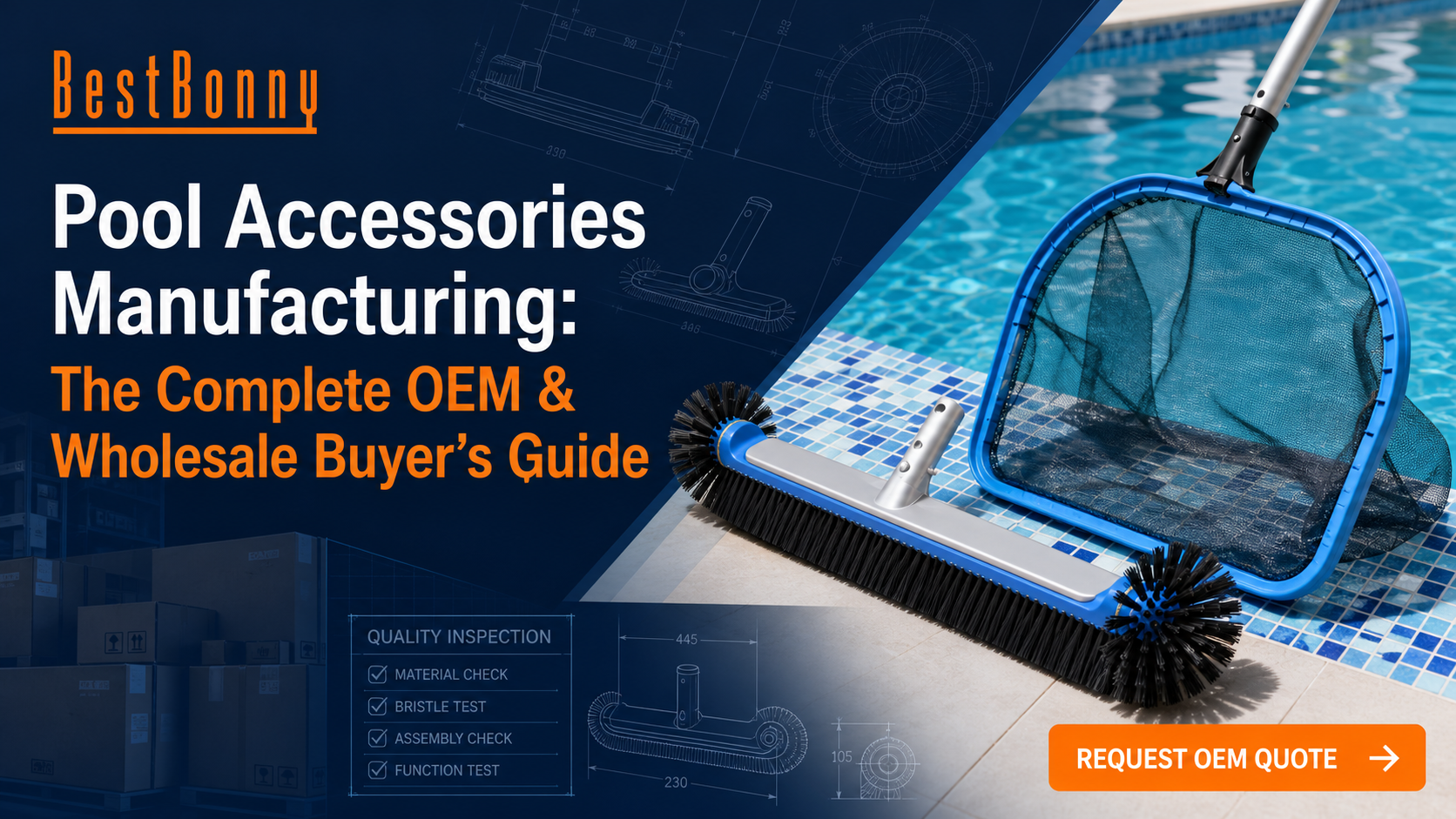
Pool Brush Typology: Application-Driven Engineering
| Brush Type | Bristle Material | Best Application | Limitations |
|---|---|---|---|
| All-Nylon | Polyamide (Nylon 6/66) | Vinyl, painted, fiberglass pools | Not for heavy scaling |
| All-Stainless Steel | AISI 304 or 316 | Unpainted concrete, gunite | Can damage liners; regulatory limits |
| Mixed (Nylon/Steel) | Dual row | Hybrid finish, tough spots | Not for sensitive surfaces |
| Specialty (Corner/Curved) | Custom (nylon/steel) | Steps, spas, irregular geometry | Coverage area limited |
- Frame Materials: ABS, polypropylene, anodized aluminum—all tested for chlorine and UV resilience (ASTM D2565 standard).
- Widths: 10"–24" options; wider for large pools, narrower for spas or corners.
Technical Performance Criteria
- Bristle Density:
Optimal: >50 tufts per 10cm² for commercial use; increases scrubbing efficiency by 30% over standard models. - Bristle Retention:
Pull-out force (per ASTM D3936): >35N required for professional-grade tools. - Chemical Resistance:
Materials should withstand pH 6.8–8.2, free chlorine up to 10ppm, and periodic shock dosing. - Attachment Interface:
Universal Euro-clip or US quick-release standard. Bonny’s upgraded aluminum back design passes 50,000-cycle fatigue testing.
Selection Checklist for Facility Managers
- Pool Finish Audit:
Confirm compatibility—use only nylon for painted/vinyl pools; steel for solid concrete. - Cleaning Frequency:
Daily brushing in public pools; 2–3 times/week in private pools, per WHO guidelines. - Ergonomics:
Weight <600g; handle angle 30–45° recommended to reduce staff fatigue. - Compliance:
Supplier must provide RoHS/REACH compliance and ISO9001 documentation.
Typical Misconceptions in Pool Brush Procurement
- “One brush fits all” myth:
Using steel on vinyl pools leads to surface damage and warranty voidance. - Ignoring bristle density:
Low-density brushes require more passes, increasing labor cost by 20–30%. - Underestimating UV exposure:
Non-UV-stabilized plastics degrade in as little as one season.
Bonny Pool Brush: Engineering Edge
- Lab-tested Materials:
All Bonny brushes are third-party tested for chlorine and UV exposure (ISO 4892-2). - Custom Bristle Patterns:
OEM/ODM available—choose density, material, and frame geometry. - Quality Assurance:
Every batch undergoes 100% visual and mechanical QC, traceable via batch code.
About Bonny Pool Supplies
With over 25 years’ industry experience, Bonny Pool Supplies (Ningbo, China) supports global commercial and residential pool projects, supplying advanced cleaning tools to 70+ countries with full regulatory compliance.