
Quick Answer: A reliable manual pool vacuum head OEM supplier should help buyers define hose-port geometry, mating dimensions, manufacturing tolerances, connection retention, and sample acceptance requirements. Before approving a custom suction head, importers should test it with the intended hose cuff and representative vacuum system. Controlled engineering drawings, production-representative samples, and dimensional inspection records provide a practical basis for consistent OEM manufacturing.
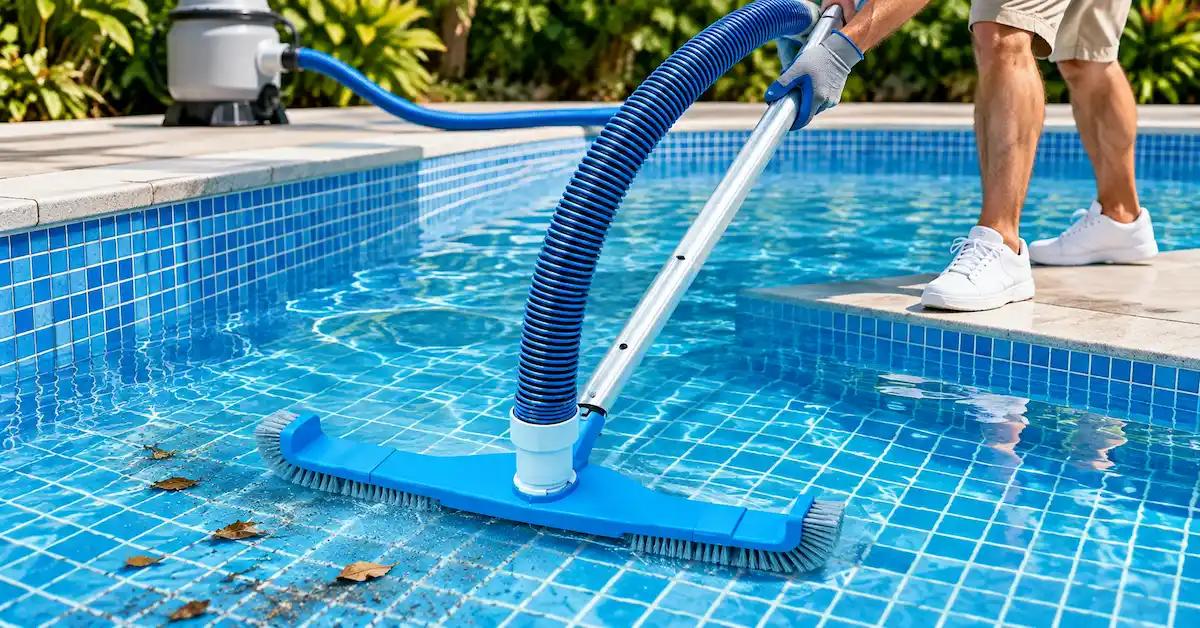
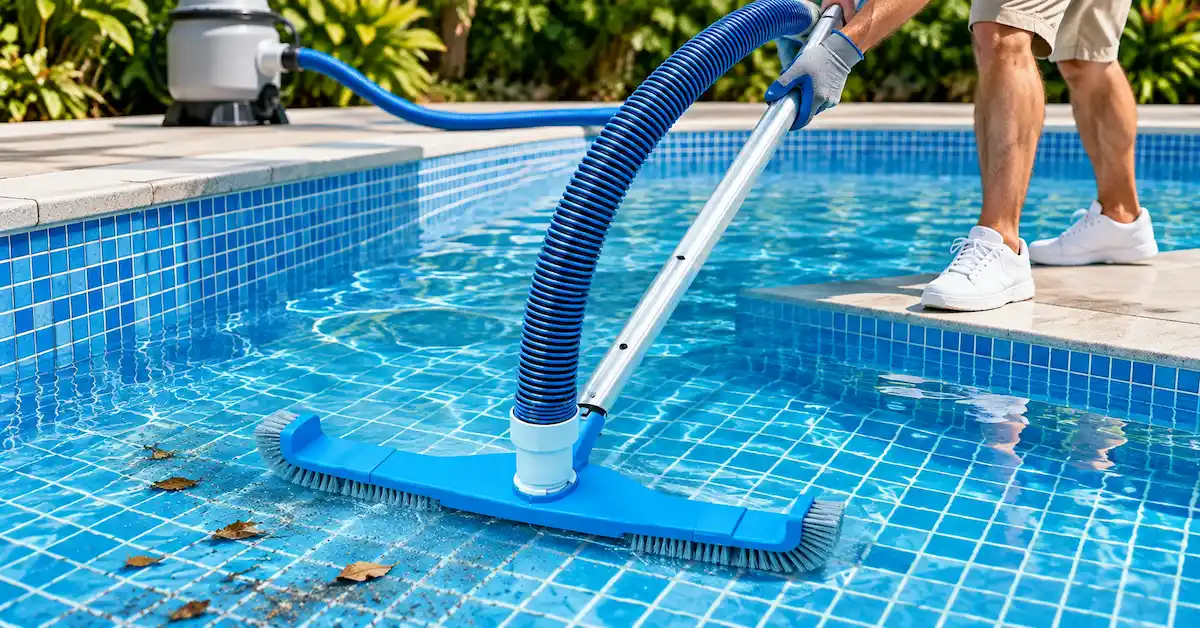
Manual pool vacuum heads depend on external suction equipment to collect debris from swimming pool surfaces.
The hose port forms an important mechanical and hydraulic interface between the cleaning head and vacuum hose.
For OEM importers, developing a custom vacuum head involves more than selecting a suitable cleaning width or adding a private-label logo.
A hose connection that is slightly different from the approved specification may create assembly difficulties, unwanted movement, air ingress under relevant operating conditions, or hose detachment.
These issues can affect an entire production order if they are not identified during sample approval.
This guide focuses on hose-port engineering, dimensional control, connection reliability, and production validation for buyers developing custom manual pool vacuum heads.
Key Takeaways for OEM Purchasing Teams
-
Define the actual hose cuff and mating geometry before designing the vacuum head.
-
Specify connection tolerances, measurement locations, engagement depth, and port profile.
-
Approve physical samples using representative production materials and compatible hoses.
-
Evaluate retention, rotational movement, and wet operating performance separately.
-
Control molding shrinkage, deformation, and connector assembly during production.
-
Establish drawing revisions and inspection criteria before approving bulk orders.
-
Request project-specific tooling, sample, manufacturing, and delivery quotations.
1. What Should Buyers Request From a Manual Pool Vacuum Head OEM Supplier?
An OEM vacuum head project should begin with a defined engineering requirement.
The supplier needs to understand the intended vacuum system, target market, and connection interface before proposing a suitable design.
This is particularly important when an importer already distributes vacuum hoses or intends to develop a compatible range of private-label equipment.
OEM Project Requirements
| Requirement | Information to Establish | Purchasing Risk |
|---|---|---|
| Target application | Intended pool type and cleaning task | Unsuitable product configuration |
| Vacuum head geometry | Width, profile and underside construction | Application mismatch |
| Hose connection | Actual mating cuff and connector dimensions | Incompatible assembly |
| Port construction | Fixed, swivel or approved alternative | Incorrect operating behavior |
| Material | Approved body and connector materials | Dimensional inconsistency |
| Manufacturing tolerance | Critical dimensional limits | Unstable hose fit |
| Sample approval | Drawing and physical trial requirements | Unverified production design |
| Quality inspection | Agreed acceptance criteria | Bulk-order defects |
| OEM customization | Structural changes, branding and packaging | Uncontrolled modifications |
Who Should Use This Procurement Approach?
This engineering-based sourcing method is particularly relevant to:
-
Pool equipment OEM importers.
-
Private-label vacuum equipment brands.
-
Engineering procurement managers.
-
Pool accessory distributors developing compatible product ranges.
-
Product development teams introducing new manual suction heads.
Buyers purchasing standard catalogue products without structural changes may require a simpler approval process.
Procurement takeaway: Define the connection interface before investing in custom tooling or final packaging artwork.
2. How Should a Custom Pool Vacuum Hose Port Be Measured?
The hose port should be specified as a functional mating interface rather than simply described by its nominal diameter.
A connection may incorporate a cylindrical spigot, tapered profile, stepped geometry, or separately assembled fitting.
Each configuration requires appropriate dimensional references.
Hose-Port Engineering Drawing Template
| Drawing Code | Dimension or Feature | Engineering Requirement |
|---|---|---|
| D1 | Port outside diameter | Measure at the specified mating section |
| D2 | Internal flow diameter | Confirm the relevant flow opening |
| D3 | Hose cuff inside diameter | Measure the corresponding receiving surface |
| L1 | Port engagement length | Define the usable connection length |
| L2 | Hose cuff insertion depth | Confirm available engagement |
| A1 | Port mounting angle | Define orientation relative to the vacuum head |
| T1 | Port wall thickness | Specify according to structural requirements |
| R1 | Entry radius or chamfer | Define the approved edge geometry |
| S1 | Seating shoulder | Identify the intended final assembly position |
| G1 | Geometrical tolerance | Define relevant roundness, profile or alignment requirements |
These codes are illustrative engineering references, not published BONNY product dimensions.
Why Measurement Locations Matter
A tapered hose port may have different diameters along its engagement length.
Measuring only the tip may provide a misleading result.
The drawing should identify the exact measurement plane and reference surface.
For a cylindrical port, diameter and roundness may also require separate evaluation.
Why Nominal Hose Size Is Not Enough
Pool vacuum hoses may be marketed using nominal sizes such as 1¼ inches or 1½ inches.
These descriptions do not establish the exact internal diameter, material flexibility, cuff geometry, or available engagement depth of every product.
A buyer should provide representative hose samples or approved technical drawings.
Engineering recommendation: Record the actual hose cuff geometry instead of relying exclusively on catalogue size descriptions.
3. Fixed vs Swivel Hose Ports: Which OEM Structure Should Buyers Specify?
Different hose-port configurations can influence assembly, movement, manufacturing complexity, and maintenance.
The selected structure should reflect the intended vacuum head design.
Hose-Port Configuration Comparison
| Configuration | Potential Engineering Benefit | Main Verification Requirement |
|---|---|---|
| Fixed cylindrical port | Relatively simple construction | Diameter, engagement and retention |
| Tapered port | Progressive mating geometry | Profile dimensions and insertion behavior |
| Stepped port | Potential accommodation of defined cuff configurations | Fit verification for each approved cuff |
| Swivel port | Allows specified rotational movement | Joint integrity, rotation and operating performance |
| Separate connector assembly | May allow component-level customization | Assembly retention and joint consistency |
| Custom molded port | Supports buyer-defined geometry | Tooling feasibility and dimensional validation |
These are possible OEM engineering concepts. They do not establish that BONNY currently offers every configuration.
Fixed Hose Ports
A fixed port may be appropriate when the buyer prioritizes a relatively straightforward connection structure.
The critical checks include hose engagement, port integrity, and the effect of hose movement on the vacuum head.
Swivel Hose Ports
A swivel design introduces additional moving interfaces.
Depending on its construction, the assembly may require verification of rotational freedom, retention, wear, and unwanted leakage.
A swivel connector should not be marketed as eliminating all hose twisting without suitable evidence.
Custom Stepped Connections
A stepped connector may be considered when an OEM brand requires compatibility with more than one specifically identified hose cuff.
Each intended connection must be tested separately.
A stepped shape alone does not demonstrate universal compatibility.
4. How Do Plastic Molding Tolerances Affect Hose-Port Fit?
Where a vacuum head or connector uses molded plastic components, dimensional accuracy depends on both design and manufacturing conditions.
Potential influences include polymer selection, molding shrinkage, cooling behavior, wall thickness, and tool geometry.
A port designed to fit one hose sample may become unsuitable if dimensional variation is not adequately controlled during production.
Applying ISO 20457 to Molded Components
ISO 20457:2026 — Plastics moulded parts: Tolerances and acceptance conditions provides a framework for specifying geometrical and dimensional tolerances for plastic molded parts within its scope.
For custom vacuum head development, the relevant principle is to establish functional tolerances that can be achieved through the selected manufacturing process.
Overly restrictive tolerances may increase tooling and production costs, while excessively broad tolerances may compromise hose fit.
The standard does not prescribe a universal hose-port dimension or certify the performance of a finished pool vacuum head.
Dimensional Risk Assessment
| Manufacturing Variable | Potential Effect | Recommended Control |
|---|---|---|
| Material shrinkage | Change in port dimensions | Approved resin and molding process |
| Uneven cooling | Distortion or ovality | Dimensional inspection |
| Tool wear | Gradual geometry changes | Tool monitoring and inspection |
| Parting-line mismatch | Interference during assembly | Surface and geometry checks |
| Excess molding flash | Difficulty inserting the hose | Visual and dimensional checks |
| Port wall variation | Potential structural weakness | Approved section dimensions |
| Material substitution | Changed flexibility or dimensions | Engineering change approval |
Why Tolerance Stacking Matters
The final connection depends on both the vacuum head and the hose cuff.
For a simplified rigid cylindrical connection:
Minimum diametral clearance = Minimum cuff inside diameter − Maximum port outside diameter
Maximum diametral clearance = Maximum cuff inside diameter − Minimum port outside diameter
These calculations help identify potential interference or excessive looseness.
However, flexible cuffs, tapered connectors, and interference-fit designs require additional functional evaluation. Diameter calculations alone cannot establish the required connection force or retention.
5. How Should Buyers Conduct Hose-Port Fit Trials?
A representative sample trial should evaluate the actual vacuum head and intended hose connection together.
The test should use identifiable components and documented acceptance criteria.
Recommended Sample Fit-Test Procedure
Step 1 — Identify the components. Record the vacuum head revision, hose model, cuff material, and connector configuration.
Step 2 — Measure critical dimensions. Compare the actual components against the approved drawings.
Step 3 — Check initial assembly. Confirm that the hose can be connected using its intended assembly method.
Step 4 — Verify engagement. Check seating position, insertion depth, and unwanted looseness.
Step 5 — Evaluate retention. Apply the agreed mechanical verification method.
Step 6 — Conduct wet-operation testing. Use a suitable controlled test arrangement within approved equipment operating limits.
Step 7 — Repeat attachment and removal. Evaluate changes in the connection after the agreed number of operations.
Step 8 — Inspect and record results. Document deformation, cracking, wear, and the final approval decision.
OEM Hose-Port Fit Trial Matrix
| Test Item | Verification Method | Acceptance Requirement |
|---|---|---|
| Port dimensions | Measurement against drawing | Within approved tolerances |
| Hose insertion | Physical assembly | Correct engagement |
| Seating position | Inspect assembled components | Matches intended design |
| Connection retention | Agreed mechanical test | Meets specified requirement |
| Rotation | Functional evaluation where applicable | Within approved limits |
| Wet operation | Controlled representative test | Meets defined performance requirements |
| Repeated attachment | Agreed connection cycles | Maintains acceptable function |
| Final condition | Visual and dimensional inspection | No unacceptable damage |
The number of samples, test loads, operating conditions, and acceptance limits must be determined for the actual OEM project.
Sample Approval Record
| Sample Reference | Hose Reference | Dimensional Result | Fit Trial | Final Decision |
|---|---|---|---|---|
| Sample A | Cuff Type 1 | Record measurements | Pass/Fail | Pending |
| Sample B | Cuff Type 2 | Record measurements | Pass/Fail | Pending |
| Sample C | Revised cuff | Record measurements | Pass/Fail | Pending |
This table is a proposed test-record format, not a completed BONNY test report.
6. Which BONNY Manual Vacuum Heads Can Be Evaluated for OEM Projects?
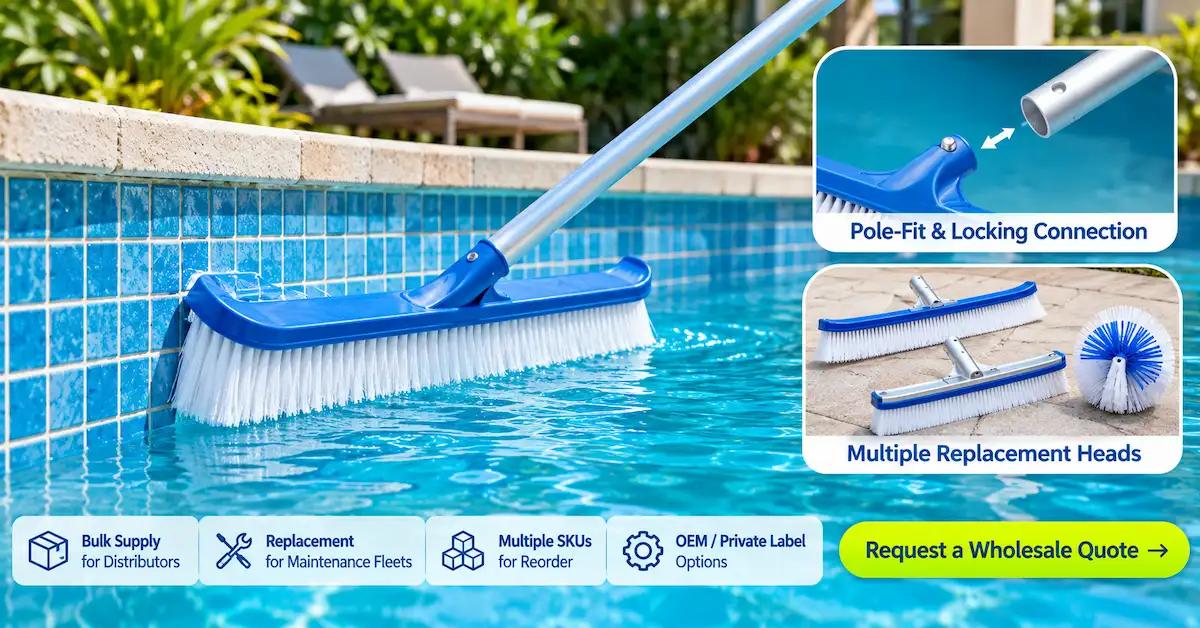
BONNY, operated by Ningbo Bonny E-Home Co., Ltd., supplies swimming pool cleaning equipment and accessories and offers OEM/ODM services for international business customers.
Its published product information includes flexible vacuum heads and combined brushing-and-suction designs.
BONNY Vacuum Head Configuration Comparison
| Product Reference | Published Design Description | OEM Engineering Focus |
|---|---|---|
| 14-Inch Flexible Pool Vacuum Head | Flexible manual vacuum head configuration | Hose-port geometry, connection orientation and body compatibility |
| 20-Inch Suction Vacuum Brush Head | Combined brushing and suction configuration | Port-to-body assembly and hose connection |
| Custom OEM Manual Suction Head | Buyer-defined development requirement | Drawing feasibility, materials, tooling and validation |
The custom OEM configuration is a potential project concept rather than a confirmed stock product.
14-Inch Flexible Vacuum Head
A flexible vacuum head provides a starting point for buyers evaluating a manual floor-cleaning accessory.
For a custom hose-port project, request confirmation of:
-
Actual connector dimensions.
-
Port attachment method.
-
Body and connector materials.
-
Connection orientation.
-
Approved hose and pole specifications.
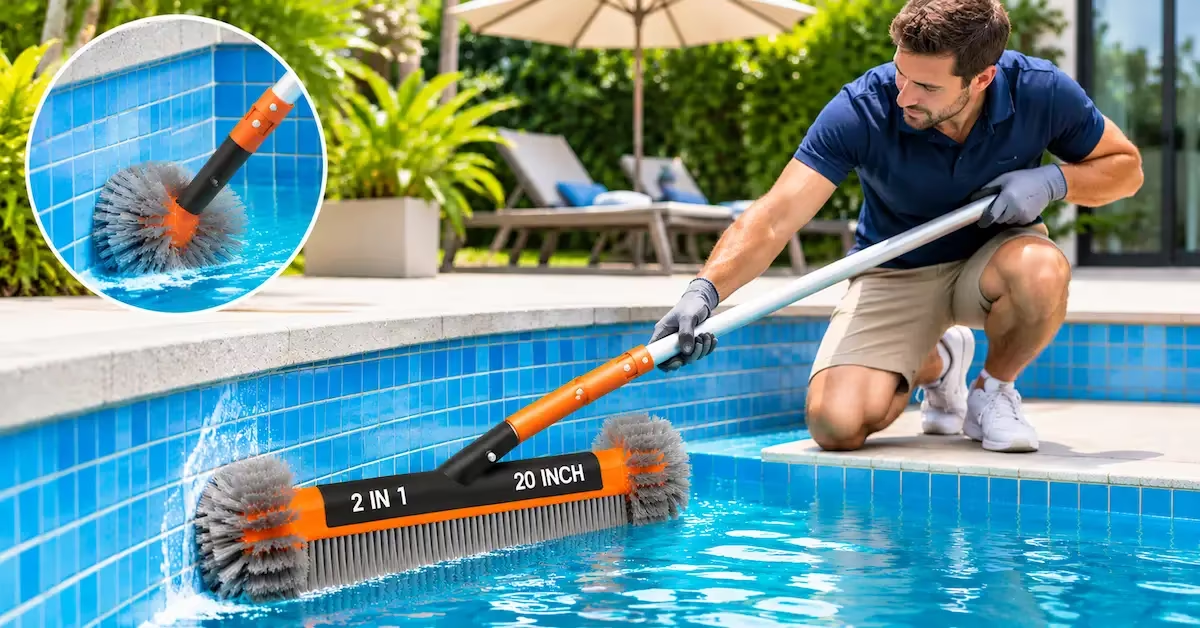
20-Inch Suction Vacuum Brush Head
A combined brush-and-suction head may be relevant to buyers developing a multifunctional manual cleaning product.
The OEM evaluation should consider how the port connects to the head body, how the hose moves during operation, and whether the proposed connection modification affects the complete assembly.
What Can BONNY Customize?
BONNY's published Engineering & Design services describe OEM production according to customer specifications, material and color customization, private labeling, prototype development, and customized product design.
Buyers should discuss the feasibility of a particular hose-port modification before approving tooling or production.
7. What Reliability Tests Should Be Required for a Custom Manual Suction Head?
Dimensional compatibility is only the first stage of engineering approval.
A custom hose connection should also maintain its required function under representative operating conditions.
Recommended Reliability Validation Matrix
| Verification Area | Evaluation Focus |
|---|---|
| Connector retention | Resistance to unintended separation |
| Repeated connection | Attachment and removal durability |
| Swivel operation, if applicable | Movement and joint integrity |
| Port-to-body assembly | Cracking, loosening or separation |
| Wet operation | Suitable connection and flow behavior |
| Material conditioning | Relevant changes after agreed environmental exposure |
| Dimensional stability | Geometry before and after evaluation |
| Packaging protection | Prevention of connector damage during shipment |
Why Port-to-Body Integrity Matters
The hose port may be molded into the body or assembled as a separate component.
A successful hose fit does not establish that the connection between the port and the vacuum head is sufficiently reliable.
The complete structure should therefore be evaluated.
Safe Operating Test Conditions
Vacuum testing should use a suitable controlled fixture, compatible equipment, and the approved operating limits.
Do not intentionally block a live suction opening or exceed the equipment's permitted operating conditions to demonstrate strength.
Testing should be conducted without swimmers present and with appropriate operating safeguards.
Engineering takeaway: Approve the complete hose-port assembly rather than evaluating the connector as an isolated component.
8. How Should OEM Buyers Control Bulk Manufacturing Quality?
Once the interface design and representative samples have been approved, production inspection should verify that subsequent units conform to the same requirements.
Production Quality Control Plan
| Inspection Stage | Main Verification |
|---|---|
| Incoming materials | Approved material specification |
| Molded components | Critical port dimensions |
| Connector finishing | Flash, burrs and surface condition |
| Port assembly | Alignment and structural integrity |
| First-piece approval | Drawing and sample conformity |
| In-process inspection | Dimensional consistency |
| Functional inspection | Fit using approved hose or fixture |
| Final inspection | Finished-product integrity and identification |
| Packaging | Connector protection and correct contents |
Using ISO 2859-1 for Bulk Acceptance
ISO 2859-1:2026 provides AQL-indexed sampling schemes for lot-by-lot inspection by attributes.
An agreed sampling plan can support inspection of defined pass/fail characteristics, such as incorrect components, damaged ports, or connector dimensions evaluated using approved gauges.
However, acceptance sampling does not replace engineering validation or guarantee that every individual vacuum head meets its intended operating requirements.
Critical dimensional and functional characteristics may require additional controls.
Pre-Production Sign-Off Checklist
| Approval Requirement | Required Evidence |
|---|---|
| Final hose-port drawing | Approved dimensions and revision |
| Material specification | Confirmed materials |
| Reference hose cuff | Identified physical sample |
| Dimensional inspection | Recorded measurements |
| Fit trial | Approved test results |
| Reliability evaluation | Applicable supporting records |
| Golden sample | Retained production reference |
| Inspection plan | Agreed methods and acceptance criteria |
| Packaging | Approved configuration |
| Production release | Buyer and supplier approval |
A prototype should not automatically be treated as proof that mass-produced components will meet the same specifications.
Production-representative samples should be approved before full manufacturing release.
9. What Determines OEM Tooling Costs and Production Lead Time?
A custom pool vacuum hose port may require different levels of manufacturing development.
An existing connector might already meet the buyer's requirements, while a new interface could require modified tooling or a completely new component design.
OEM Development Options
| Development Approach | Potential Cost Consideration | Required Approval |
|---|---|---|
| Existing port configuration | Limited structural development | Fit and sample verification |
| Existing port with branding | Artwork and packaging | Branding approval |
| Modified connector | Engineering and potential tooling changes | Revised drawing and fit trial |
| New hose-port design | New development and possible tooling investment | Complete design validation |
| New vacuum head assembly | Broader product development | Full project qualification |
Commercial Cost Factors
Buyers should consider engineering development, tooling, materials, sample production, testing, packaging, inspection, freight, and potential replacement expenses.
A lower product quotation may not provide better value if the connection generates compatibility-related returns.
MOQ, production capacity, tooling schedules, and delivery commitments must be confirmed for each project.
Buyers should also agree on tooling ownership, maintenance responsibilities, and approval requirements for future changes.
10. How Should Buyers Manage OEM Drawing Revisions?
A vacuum head approved using one connector design may become incompatible if critical dimensions or materials change.
For repeat orders, the purchase specification should identify the current approved drawing revision.
Changes requiring review may include port diameter, engagement length, molding material, connector geometry, assembly method, and hose-cuff requirements.
A practical engineering change record should identify:
-
Previous and proposed revisions.
-
Reason for the change.
-
Affected components and dimensions.
-
Required testing or requalification.
-
Buyer approval.
-
Effective production batch.
This process helps maintain compatibility across future manufacturing orders.
11. What Should Importers Include in a Manual Pool Vacuum Head OEM RFQ?
An effective request for quotation should provide enough information for the supplier to evaluate both technical feasibility and commercial requirements.
OEM Project RFQ Checklist
| RFQ Field | Information to Provide |
|---|---|
| Buyer type | OEM importer, distributor or engineering purchaser |
| Reference product | Existing model, photographs or drawings |
| Intended application | Pool type and cleaning requirements |
| Vacuum head dimensions | Required body width and geometry |
| Hose cuff reference | Actual model and sample |
| Hose-port dimensions | Mating diameter and engagement length |
| Port structure | Fixed, swivel or custom configuration |
| Material requirement | Body and connector specifications |
| Manufacturing tolerance | Approved critical dimensional requirements |
| Functional tests | Fit, retention and wet-operation checks |
| Reliability requirements | Agreed test methods and acceptance criteria |
| Tooling | New or modified tooling requirements |
| OEM branding | Logo, color, instructions and packaging |
| Estimated quantity | Initial and expected repeat orders |
| Destination market | Import country and sales channel |
| Commercial terms | Quotation, MOQ and proposed schedule |
Request a Custom Hose-Port Engineering Quotation
If you are developing an OEM manual suction head, provide BONNY with your reference vacuum head, hose cuff sample, connection drawings, expected purchasing quantity, and intended application.
Where the final interface has not yet been designed, submit your existing equipment specifications for a preliminary engineering discussion.
Contact BONNY for Custom Vacuum Head Drawings, Hose-Port Sample Development and OEM Quotations
Frequently Asked Questions
1. How do I choose a manual pool vacuum head OEM supplier?
Evaluate the supplier's engineering support, product range, molding capabilities, drawing approval process, sample validation, and manufacturing quality controls. Request evidence relevant to the proposed hose-port configuration.
2. Can a manual pool vacuum head use different hose sizes?
Potentially, depending on the actual connector design. Each intended hose cuff should be evaluated separately. Nominal hose sizes do not establish universal compatibility.
3. What dimensions should a custom pool vacuum hose port drawing include?
The drawing should identify mating diameters, engagement length, port angle, wall thickness, seating geometry, and relevant geometrical tolerances.
4. Is a swivel hose port better than a fixed connection?
Not necessarily. A swivel design may provide useful rotational movement but introduces additional components and verification requirements. The correct choice depends on the intended application.
5. What causes incompatible vacuum head hose connections?
Possible causes include incorrect diameters, unsuitable taper geometry, insufficient engagement, molding variation, and differences in hose cuff construction.
6. Can dimensional inspection replace a physical fit trial?
No. Dimensional inspection verifies specified measurements, while a physical trial evaluates how the actual components assemble and function together.
7. Does ISO 20457 specify standard pool vacuum hose-port sizes?
No. It addresses tolerances and acceptance conditions for plastic molded parts within its scope. Buyers must establish product-specific interface requirements separately.
8. Can BONNY develop customized manual pool vacuum heads?
BONNY offers OEM and ODM engineering services. The feasibility of custom hose ports, connector modifications, materials, and other design changes should be evaluated for each project.
9. What determines OEM vacuum head tooling costs?
Costs depend on the existing design, required modifications, material, tooling complexity, sample validation, and commercial arrangement. Request a project-specific quotation.
10. What documents should buyers approve before bulk production?
Approve the final drawings, material specifications, fit-test results, representative production samples, inspection criteria, packaging requirements, and relevant commercial terms.
Conclusion
Choosing a reliable manual pool vacuum head OEM supplier requires a controlled engineering process focused on connection geometry, hose compatibility, manufacturing tolerances, and complete assembly reliability.
For OEM importers and engineering procurement teams, a custom hose port should be defined through accurate drawings and verified using representative physical components.
A successful sample fit trial must also be supported by appropriate reliability evaluation and production inspection.
Maintaining approved materials, drawing revisions, golden samples, and change-control procedures helps buyers establish more consistent OEM supply arrangements.
BONNY, operated by Ningbo Bonny E-Home Co., Ltd., supplies swimming pool cleaning equipment and offers OEM/ODM product development services for international B2B customers.
Whether you are evaluating an existing manual vacuum head, modifying a hose-port interface, or developing a private-label suction head, BONNY can review your technical requirements and discuss suitable engineering and manufacturing options.